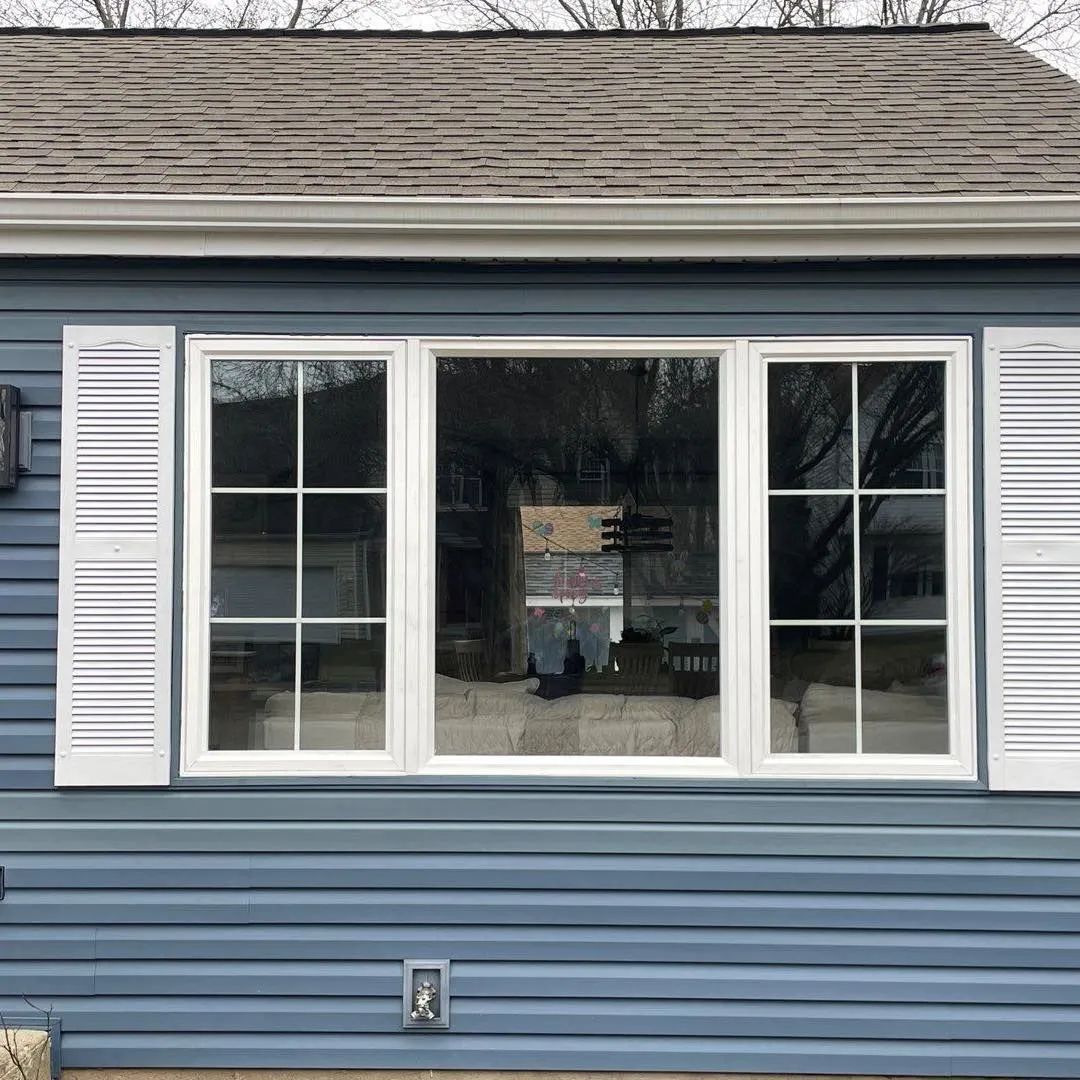
Foggy or Cloudy Glass Between the Panes? Why the Window Seal Failed
Quick Answer: The haze sitting between your window's panes means the seal on the insulated glass unit gave out and let humid air into a space that's supposed to stay bone dry. Cleaning won't touch it, because the fog sits on interior glass surfaces you can't reach. Most of the time, the fix is a new glass unit, not a whole new window, unless the frame around it has problems of its own.
You've probably already tried the obvious thing. Glass cleaner, a rag, both sides of the window, over and over. The haze just sits there. Maybe you figured it would burn off once the weather warmed up. It didn't, and if you're honest with yourself, it's looked a little worse every cold snap since.
That cloudiness isn't dirt. It isn't even on a surface you could touch with a rag. It's trapped inside a sealed cavity, and once you understand what's happening in there, the next move gets a lot clearer.
What's Actually Happening Behind the Glass
Modern replacement windows use an insulated glass unit, or IGU: two or three panes separated by a metal or composite spacer bar and sealed shut around the edges. That gap gets filled with air or an inert gas like argon. Its whole purpose is slowing down heat transfer so your living room stays comfortable and your furnace isn't fighting a losing battle.
For that to keep working, the seal around the edge has to hold for the life of the window. The moment it doesn't, that gap stops being a controlled, dry pocket and starts acting like the rest of your house sitting under Illinois humidity. That's the root of the problem.
The Spacer Bar and Its Desiccant
Inside that spacer bar sits a strip of desiccant, the same kind of moisture-absorbing material packed into a shoebox to keep new shoes dry. When the window gets built, the air between the panes is dried out, and the desiccant's job is soaking up any last trace of moisture so the cavity stays dry for years.
But desiccant only holds so much. Once the edge seal starts to weaken and lets in even a trace of outside air, the desiccant gets to work pulling that moisture out, bit by bit. You won't see anything for a while. That's the desiccant doing exactly what it's built to do.
Eventually it maxes out. Once it's saturated, it can't absorb another drop, and the moisture starts condensing directly on the inside faces of the glass. That's the moment the haze shows up, sometimes as a light film, sometimes as streaking that seems to track the temperature outside.
Why the Seal Gives Out
Seals rarely fail in one dramatic moment. They wear down over years, and the main driver is something window techs call thermal pumping.
Your windows heat up in direct sun and cool back down overnight, day after day. In a Chicago winter, that swing gets brutal — a window might sit a few degrees above zero overnight and climb past 40 by mid-afternoon on a sunny day, especially on south- and west-facing walls. Each swing forces the gas inside the sealed unit to expand and contract, pushing and pulling on the edge seal like a small bellows. Thousands of cycles a year, every year.
Layer in the freeze-thaw pattern that's just normal life in Oswego, Naperville, and Aurora, and that seal is under constant mechanical stress for months at a stretch. Sealants are built to absorb a lot of that movement. They're not built to absorb it forever. Small fractures develop over time, and once they do, humid outside air finds its way in and the countdown on desiccant saturation starts.
Vinyl frames tend to take more of this abuse than wood or fiberglass, since vinyl expands and contracts more with temperature swings. That's worth knowing if one window in your house fogged up years ahead of its neighbors.
It's Not Always Just Age
Age plays a role, sure. But a window with a weak seal from the factory, one exposed to unusually harsh sun and wind, or one installed slightly out of square can fail well before its time. If you've got one foggy window surrounded by clear ones the exact same age, the culprit is usually that window's installation or exposure, not simple wear.
Tip: Check the corners of your glass during your regular seasonal cleaning, not just the center of the pane. Early seal failure often shows up first as a faint ring or shadow tucked in a corner, long before the whole window clouds over. Catching it there gives you time to plan the fix instead of reacting to it.
Why You Can't Just Wipe It Away
This is the part that trips people up most. The condensation between the panes isn't sitting on a surface you can reach with a rag, a squeegee, or even a professional window cleaner. It's on the interior faces of glass permanently sealed together as one unit.
Picture a snow globe. You can't crack it open, wipe the inside, and reseal it good as new. Once the seal has broken down enough to let moisture in and the desiccant has given up, the insulated glass unit has lost the very thing that made it insulated. Cleaning the outer surfaces might buy you a few clearer minutes. The fog living between the panes stays put until the unit itself gets addressed.
There's a hidden cost beyond the view, too. Once the gas fill has leaked out and moisture has taken its place, that window has stopped performing the way it was built to. You're losing the insulating benefit you paid for, even if the frame and hardware around it look fine.
Glass Replacement vs. Full Window Replacement
A failed seal in an otherwise healthy frame usually points toward replacing the insulated glass unit itself, not tearing the whole window out. If the frame is square, the hardware operates smoothly, and the trim and sill around it are solid, swapping in a new IGU restores the seal and the insulating performance without disturbing anything else.
That's not the answer in every case, though. Full window replacement makes more sense when the frame shows rot, warping, or water damage around the sash or sill. It also makes sense when a window has more than one problem stacked up at once, like a failed seal paired with hardware that no longer opens or closes properly. Add in a frame material that's outdated for your home's efficiency goals, or several windows in the same room failing around the same time, and you're likely looking at a bigger project than a single glass swap.
A window professional can check the frame condition, test for square, and run the hardware to sort out which category your window falls into fairly quickly. Foggy glass sitting inside a sound frame tends to be one of the easier calls in this line of work.
Signs Worth Watching For
A few clues tend to show up alongside the fog itself, or just ahead of it. A haze or film between the panes, rather than on the inside or outside glass surface. Water droplets or streaking trapped inside the sealed cavity, especially after a cold night. A window that used to feel warm to the touch in winter and now feels noticeably colder near the glass. One window that looks different from its neighbors even though they went in on the same day.
Once a window shows you any of those, it's already told you what's wrong. There's no waiting it out and hoping it resolves.
The temperature swing matters, too. Cold air pressing against a failed seal in January doesn't behave the same way it does in July, which is part of why the fog often seems worst on the coldest mornings of the year. Homeowners around Aurora and Naperville notice it most right after a hard freeze. The bigger the gap between inside and outside air, the more visible the condensation gets, even though the seal actually failed months or years earlier.
Warning: Don't drill a small hole into the spacer bar or edge seal to try to "vent" the fog yourself. It might clear the haze for a few days, but it destroys what's left of the sealed cavity, invites more moisture in permanently, and turns a glass-only fix into a full unit replacement. Leave the glass alone and have someone qualified look at it.
Living With It vs. Fixing It
Plenty of homeowners live with a foggy window for a while, especially in a spare room or a space that doesn't get much use. That's a fair short-term call, and nobody needs to rush a decision on a guest bedroom window.
Here's what won't change on its own: the haze doesn't clear up over time, and the insulating performance lost when the seal failed doesn't come back without a fix. If the window sits somewhere you actually live — the kitchen, the living room, a bedroom you use every night — addressing it sooner keeps a contained problem from turning into a bigger one down the line.
Frequently Asked Questions
Can I just refill the gas between the panes myself?
No. The gas fill only works inside an intact, sealed unit. Once the seal has failed enough to let moisture in, the unit needs replacing rather than refilling — there's no way to reseal it to factory standards once you're standing in front of it with a drill.
Will the fog eventually clear up on its own?
No. Once the desiccant is saturated and moisture is condensing between the panes, that condition sticks around until the glass unit gets replaced.
Does every foggy window mean I need a whole new window?
Not necessarily. Most foggy glass traces back to a failed seal in glass that sits inside a perfectly sound frame, which usually means the glass unit alone can be swapped out.
Why does only one window in my house look foggy when they're all the same age?
Sun exposure, wind exposure, and small differences in how each unit was sealed at the factory can all cause one window to fail years ahead of the rest.
A Failed Seal Has a Straightforward Fix
A foggy window between the panes is your glass telling you the seal has run its course. No cleaning routine or warm afternoon changes that. Frame condition is really the only variable that decides where you go from here: a sound frame usually means a glass swap, while a damaged or aging one shifts the conversation toward full replacement. Either way, catching it early keeps a contained problem from turning into a bigger one down the line.
With 10
years of experience, A&D Exteriors and Remodeling
has spent that time sorting out exactly
which windows across Oswego, IL and the surrounding suburbs need a new glass unit and which ones need to come out entirely. Our team checks the frame and glass directly rather than guessing at a fix, giving homeowners a straight answer before another Illinois winter puts more strain on a seal that's already given out.