Drafts Pouring In Around Your Windows Each Winter? Where the Gaps Hide
Windows play a critical role in the comfort, appearance, energy efficiency, and overall performance of any home. Beyond providing natural light and ventilation, properly installed windows help regulate indoor temperatures, protect against weather intrusion, reduce outside noise, and contribute to long-term property value. As homeowners look for ways to improve their homes while managing costs, many consider tackling window replacement projects on their own. The availability of online tutorials, home improvement guides, and retail installation kits often creates the impression that window installation is a straightforward task. However, replacing or installing windows involves far more than simply removing an old unit and placing a new one into the opening.
Professional window installation remains one of the most important factors influencing how well new windows perform over time. Even high-quality products can fail to deliver expected benefits when installation mistakes occur. Improper measurements, inadequate sealing, structural issues, water infiltration, and reduced energy efficiency are just a few problems that can result from an unsuccessful DIY project. Understanding the differences between professional installation and do-it-yourself approaches helps homeowners make informed decisions about protecting their investment. By examining the complexities, risks, and long-term implications involved, it becomes clear why professional window installation often provides greater value, reliability, and peace of mind than attempting the project without specialized expertise.
Why You Feel a Draft (Even Without a Big Gap)
Before hunting for gaps, it helps to know that not every cold sensation near a window is air leaking in, and telling the difference matters.
There are really two things going on at a cold window. The first is genuine air infiltration: outside air leaking through a gap somewhere around the window. The second is convection off the cold glass. Glass is a poor insulator, so in winter the interior surface of the window gets cold, it chills the air right against it, and that cold air sinks and rolls down into the room. You feel moving air and assume it is a leak, but in that case the "draft" is cold indoor air being created by the cold glass, not outdoor air getting in.
Why does this distinction matter? Because the two have different fixes. Air infiltration is solved by sealing gaps. Convection off cold glass is about the window's insulating performance, which is improved by things like better glazing, storm windows, or eventually more efficient windows. A lot of homeowners caulk endlessly chasing a draft that is actually cold-glass convection, or ignore a real air leak because they assume it is "just the cold glass." Knowing which one you have points you to the fix that will work.
Where the Hidden Gaps Actually Are
When it is true air infiltration, the leak is coming from one of a handful of places, and several of them are out of sight.
Worn or compressed weatherstripping
The operable parts of a window, where a double-hung window's sashes meet, or where a casement closes against the frame, rely on weatherstripping to seal. Over years that weatherstripping wears, flattens, cracks, or peels, and cold air slips through the gap it used to close. This is one of the most common sources on a window that opens.
Failed caulk where the window meets the siding
On the outside, the joint between the window frame and the wall is sealed with caulk. Caulk does not last forever; it shrinks, cracks, and pulls away with age and with freeze-thaw cycling, opening a path for air right at the perimeter.
Gaps hidden behind the interior trim
This is the big hidden one. When a window is installed, the space between the window frame and the rough opening in the wall is supposed to be insulated and sealed, then covered by the interior casing. If that space was left under-insulated or never properly sealed, cold air pours into that cavity and leaks out around the trim, while you feel it at the window with no visible gap to explain it. The leak is literally behind the woodwork.
Shrunken, warped, or damaged sashes and frames
Older wood windows shrink and shift over time, and the sash may no longer sit tightly in the frame. Damage, rot, or hardware that no longer pulls the window closed snugly all leave gaps.
A failed seal between the panes
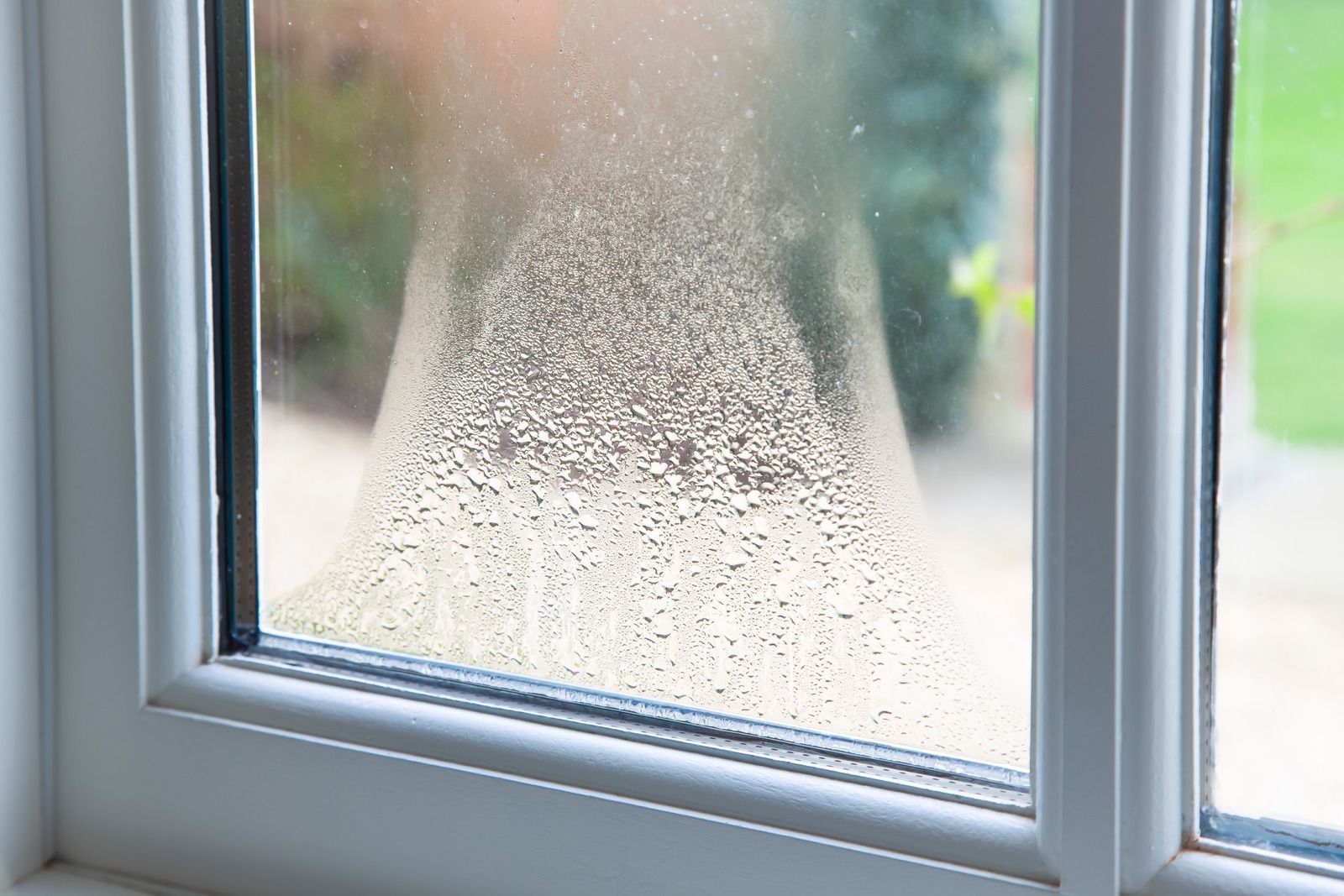
On double-pane windows, if the seal between the glass panes fails, the window loses insulating value (you may see fogging between the panes). That does not leak outside air, but it makes the glass colder and the convection worse, which feels like a draft.
The reason drafts are so maddening to chase is exactly this mix: some sources are visible, some are behind the trim, and some are not air leaks at all. A real fix starts with finding which you have.
Tip: On a cold, ideally breezy day, slowly move the back of your hand or a lit incense stick around the whole perimeter of the window, the sash joints, the corners, along the trim, and where the trim meets the wall. Where you feel cold air or see the smoke pull sideways, that's a true air leak. If the cold is strongest right off the glass itself but the edges and trim are still, you're likely feeling convection off cold glass rather than infiltration, which points to a different fix.
How the Drafts Get Sealed for Good
A lasting fix follows the source, handling each kind of gap with the right approach.
Replace worn weatherstripping
Fresh weatherstripping on the operable parts restores the seal where the sashes or casement close, shutting down one of the most common leaks on a window that opens.
Re-seal the exterior perimeter
Removing failed, cracked caulk and applying fresh, quality sealant at the window-to-wall joint closes the perimeter path that age and freeze-thaw opened up.
Air-seal and insulate behind the trim
Where the hidden cavity around the window frame was never properly sealed, the fix is to address that space, sealing and insulating the gap between the frame and the rough opening so cold air stops pouring into it. This is the one most likely to solve a draft that nothing else touched.
Repair or replace failed windows
When a window's sash no longer seats, the frame has shifted or rotted, or the glass has lost its insulating performance, repair restores a tight fit, and in some cases replacement with a properly installed, more efficient window is the durable answer, both sealing the air and cutting the cold-glass convection.
The right combination depends on what the inspection finds, which is exactly why identifying the real source first is what separates a fix that lasts from another winter of chasing drafts.
Frequently Asked Questions
Why do I feel a draft when my window is closed and looks sealed?
Often because the gap letting air in is hidden, behind the interior trim where the frame meets the wall, or in worn weatherstripping you can't see. Air travels, so you feel the cold somewhere other than the actual leak. Some "drafts" are also cold air sinking off the glass rather than outside air getting in.
How do I tell a real air leak from cold air off the glass?
On a cold day, move your hand or a lit incense stick around the window's edges and trim. Where you feel moving air or the smoke pulls sideways, that's a true leak. If the cold is strongest right at the glass surface but the edges are still, you're feeling convection off cold glass, which is a different fix.
Will caulking around my windows stop the drafts?
Sometimes, but often not. Caulk seals fixed joints like the exterior window-to-wall seam, but it can't fix worn weatherstripping on the parts that open, and it does nothing for cold air leaking into the hidden cavity behind the trim. Matching the fix to the actual source is what works.
What's weatherstripping and how is it different from caulk?
Weatherstripping seals the moving parts of a window, where sashes meet or a casement closes, and it's meant to compress and release as the window operates. Caulk seals fixed, non-moving joints. Using caulk where weatherstripping belongs (or vice versa) is a common reason draft-sealing fails.
Why are the gaps often behind the trim?
When a window is installed, the space between the window frame and the wall's rough opening should be sealed and insulated, then hidden by the casing. If that step was skimped, cold air fills that cavity and leaks out around the trim, invisible from the room. It's one of the most common hidden draft sources.
Should I repair my drafty windows or replace them?
It depends on what's wrong. Worn weatherstripping, failed caulk, and an unsealed cavity are usually sealed with targeted repairs. But if the sash no longer closes tightly, the frame has rotted or shifted, or the glass has lost its insulating value, repair or a properly installed replacement window may be the lasting answer. An assessment determines which.
Closing the Door on Window Drafts
A window that leaks cold air all winter is rarely sealed by guessing. The gap is often hidden behind the trim or worn into the weatherstripping, and some of what feels like a draft is really cold air rolling off the glass, a different problem entirely. Tracking down the true source, by feel and sometimes by looking behind the casing, is what lets the fix actually land: weatherstripping for the moving parts, sealing and insulation for the hidden cavity, fresh caulk at the perimeter, and repair or replacement when the window itself has given out. Find the gap, match the fix, and the rooms by your windows finally feel as warm as the rest of the house.
Track down the real source of your window drafts — The cold air you feel is often leaking from a gap you can't see, behind the trim or through worn weatherstripping, so sealing the wrong spot leaves you shivering through another winter. With 10
years of experience serving Oswego, Illinois, A&D Exteriors and Remodeling
finds where the air is actually getting in and matches the fix to it, from weatherstripping and sealing to repair or properly installed
window replacement windows, for homes across the Oswego area. Reach out for a window assessment and make the rooms by your windows comfortable again.